
Case Studies

Field examples where modular drive packages simplified maintenance decisions.

These examples use customer categories rather than private brand names, because the engineering lesson matters more than a borrowed logo. Each case starts with a plant constraint: a failed reducer that must fit the same envelope, a conveyor that starts under load, a packaging line that needs consistent motion, or a purchasing team trying to reduce spare variation without creating new risk.

Packaging conveyor case

European food group standardizes conveyor gearmotors

The plant had three generations of gearmotor frames across filling, labeling and case packing. Each replacement order required manual cross-checking, and emergency substitutions often changed terminal box orientation or brake voltage. The review documented shaft height, output rpm, service factor and washdown exposure, then reduced the active spare set to three modular configurations. Maintenance now orders by application record, not guesswork, and the purchasing team can compare like-for-like units across plants. The team also linked brake behavior and inverter ramp settings to the mechanical record, so a replacement unit does not arrive with the right shaft but the wrong motion profile.
Airport conveyor case

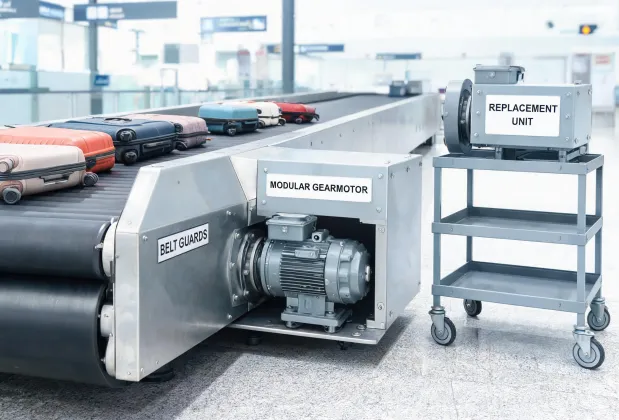
Airport material handling integrator reduces site variation

An integrator building baggage conveyors needed the same drive behavior across multiple terminals. The SEW-EURODRIVE stack paired gearmotor ratios with inverter ramps and brake settings so installers could commission repeatable zones. The documented package included kW, Nm, controller parameters and replacement notes, which reduced the number of local interpretations during handover to the airport maintenance group. Spare planning also became easier because the same application description was used at each terminal rather than a local nickname for the drive.

Mining conveyor case

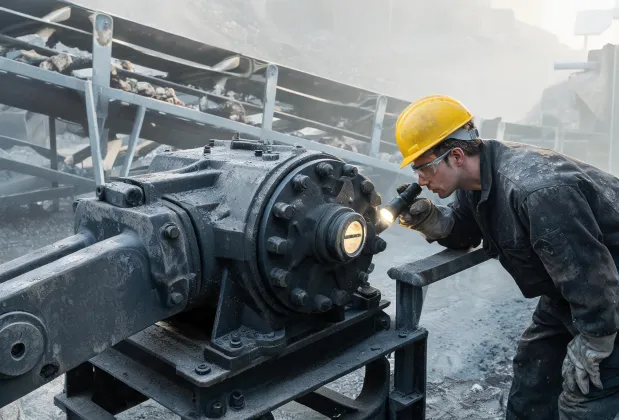
Bulk handling operator addresses shock loading

A bulk materials site was replacing reducers early after loaded starts. Engineers rebuilt the selection around measured starting torque, thermal margin and SF 2.0 assumptions, then adjusted acceleration through the drive electronics. The final recommendation did not simply increase frame size; it tied gearbox life, inverter ramp and inspection interval together so operations could judge the tradeoff between spares, energy and uptime. The updated record also gave maintenance a clearer oil inspection routine and a documented reason for the selected ratio.

Have a similar drive problem?

Share the failure mode, nameplate data and production constraint. We will return a practical replacement or standardization path.